
Confined Space Training
Select a course below to see details, competency codes and book your seat. Prefer to talk it through? Call (02) 4960 9611.
Confined Space Enter and Work1 day+
Foundation confined space qualification for operators entering enclosed or partially enclosed spaces to carry out work or inspections.
See course information and book trainingConfined Space Enter + Work Gas + BA2 days+
Intermediate confined space course for operators who also perform gas testing and wear breathing apparatus.
See course information and book trainingConfined Space Enter, Work Gas, BA Rescue + Standby3 days+
Full confined space credential including rescue in complex environments as a team member or single agency. Recommended for standby / safety observers.
See course information and book trainingConfined Spaces Refresher1 day+
Comprehensive refresher for confined space workers, sentries and standby personnel who need to reissue their qualifications.
See course information and book training
Associated Training
Gas Test Atmospheres½ day+
For personnel required to test the working atmosphere of a confined space to determine if it is safe to enter and work in.
See course information and book trainingOperate Breathing Apparatus½ day+
For operators required to wear self-contained breathing apparatus (SCBA) for part of their job.
See course information and book trainingIssue Work Permits½ day+
Equips permit issuers with the knowledge and skills to authorise high-risk work and coordinate hazard controls for teams and contractors.
See course information and book training
Enquire about Confined Space Training
Tell us the dates, numbers and location — we'll confirm availability and pricing within one business day.
Confined Space Training FAQs
What is confined space training?+
Confined space training equips workers with the skills to identify hazards, use equipment, and follow procedures for entering and working in confined spaces—defined as enclosed areas with limited entry/exit and risks like oxygen deficiency, toxic gases, or engulfment. Nationally accredited courses align with units like RIIWHS202E (Enter and Work in Confined Spaces) under the Australian Qualifications Framework (AQF). It's mandatory for anyone entering such spaces per the Safe Work Australia Model Code of Practice for Confined Spaces.
Who Needs Confined Space Training in Australia?+
Anyone who enters or works in confined spaces, including supervisors, stand-by personnel, and rescuers, must be trained. This includes roles in mining, oil and gas, water treatment, and construction. Employers must assess risks via a confined space hazard identification process and provide training based on workplace needs. Even spotters or those issuing permits require it. Per the Safe Work Australia Model WHS Regulations (Section 68), employers must ensure workers are trained in confined space risks relevant to their duties. This includes risk assessments, emergency plans, and signage. Non-compliance can lead to fines up to $300,000 for corporations. States like NSW and VIC enforce via SafeWork agencies, requiring competency-based assessments.
What qualifications do you need to work in a confined space?+
To legally work in a confined space in Australia, workers must hold a Statement of Attainment for the relevant nationally recognised units such as: • RIIWHS202E – Enter and work in confined spaces • MSMWHS217 – Gas test atmospheres • PUASAR025 – Undertake confined space rescue (for standby or rescue personnel)
How long does confined space training take?+
Initial courses usually last 1 day (8 hours) for basic training, including theory, practical exercises, and assessment. More comprehensive or advanced courses may extend to 2 days. Some blended options combine 8 hours face-to-face with self-paced online modules. Refresher courses are shorter: 4 hours to 1 day.
How often do you need to refresh training to remain certified+
Confined space training does not expire with a fixed timeline under SafeWork Australia regulations. Instead, refresher training frequency depends on workplace risk assessments—provide it when skills may have declined, such as after 2 years or if workers rarely enter spaces. Many providers and industry guidelines recommend refreshers every 2 years to maintain competency and comply with record-keeping requirements (e.g., SafeWork NSW mandates records for at least 2 years). High-risk sites may require annual refreshers.
What is the cost of confined space training in Australia?+
Expect to pay $150–$300 for a standard 1-day initial course, depending on location, provider, and inclusions (e.g., equipment hire). Two-day advanced courses range from $300–$600. Refresher training costs $110–$295 for half-day to 1-day sessions. Prices may vary by state—e.g., slightly higher in metro areas like Sydney or Melbourne—and group bookings often offer discounts. Always check for GST inclusion and certification fees.
Who needs confined space training?+
• Construction and mining workers • Maintenance personnel • Utility and sewer workers • Safety officers and emergency responders • Engineers or inspectors entering tanks or pits
Zokal Confined Space Training FAQs
Why choose Zokal for confined space training?+
Zokal Safety Training offers the most advanced confined space training facilities in Australia, equipped with cutting-edge, immaculately maintained gear and purpose-built simulation environments that replicate real-world conditions.
Where is Zokal's confined space training conducted?+
Training is conducted at Zokal's dedicated training centre at Friesian Business Centre, Unit 4, 5 Friesian Close, SANDGATE, NSW 2304, Australia. It is designed to offer immersive, hands-on experience in controlled, safe conditions. On-site training is also available for large teams.
Is Zokal's confined space training nationally recognised?+
Yes. All Zokal courses meet Australian WHS standards and result in a nationally recognised Statement of Attainment upon successful completion.
How experienced are Zokal's trainers?+
Zokal's trainers are highly competent industry professionals with real-world experience in mining, rescue, and industrial operations. They focus on not just compliance, but also practical, life-saving techniques.
How does Zokal maintain such high training standards?+
Zokal uses only new and meticulously maintained safety gear, ensuring that trainees work with equipment identical to what they'll use in the field. Their facilities are regularly updated to reflect current industry practices and risks.
What do others say about Zokal's confined space training?+
With over 390 5-star reviews on Google, Zokal is one of Australia's most trusted safety training providers. Clients consistently praise the professionalism, quality of instruction, and real-world relevance of their training programs.
Can Zokal provide confined space rescue training too?+
Absolutely. Zokal offers advanced training for standby and rescue teams, including PUASAR025 (Undertake confined space rescue), using high-angle rescue setups and full-body harness systems in their realistic training towers.
How can I book confined space training with Zokal?+
You can book through the calendar or contact our training team on (02) 4960 9611 for group bookings and customised onsite programs. We also assist with ensuring your training aligns with your company's WHS obligations.
Confined Space Training
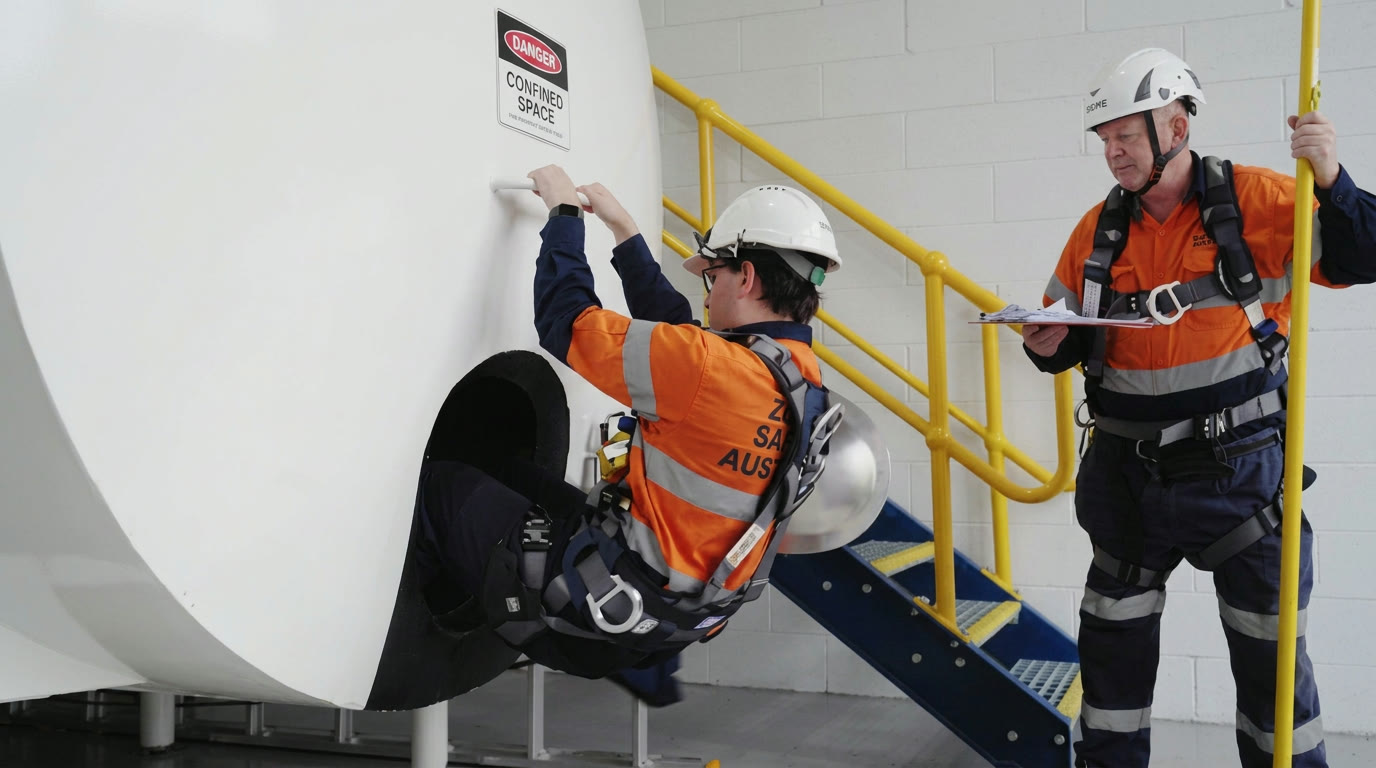
Enter, work in and exit confined spaces safely and compliantly.
Nationally recognised
Statement of Attainment issued under RTO 91267.
Regular public dates
Live calendar with instant online booking.
Sandgate NSW or on-site
Purpose-built facility or delivered at your workplace.
Small practical groups
Hands-on training with experienced industry trainers.
The tank doesn't warn you before it runs out of air.
SafeWork AU records show that most confined-space fatalities happen to experienced workers on jobs they'd done a hundred times. Training isn't paranoia — it's the only reason they walk out.
Atmosphere first, not last
Most fatal entries fail gas-test discipline. We drill it until it's muscle memory.
Standby that actually stands by
A standby person without training is a witness, not a rescuer.
The 4-minute window
You have 4 minutes to get an unconscious worker out. Untrained crews never make it.
What actually goes wrong on Australian sites
Regulators, insurers and Tier-1 clients don't accept excuses. Here's what happens when training gets cut.
Workers doing high-risk tasks without current, verifiable training.
What happens: First incident triggers a WHS investigation. Site is shut, insurers get involved, contracts freeze.
Median AU WHS fine: $260,000 per breach. Median downtime: 11 days.
Out-of-date tickets or 'she'll be right' toolbox talks instead of assessed competency.
What happens: Regulators treat expired training the same as no training. Insurers deny claims.
Uninsured incident average: $180,000+ borne by the business.
Tenders lost because your team can't prove nationally recognised competency.
What happens: Tier-1 contractors now filter suppliers on ASQA-audited certification only.
Missed contract value: often $250k – $2M per year for mid-sized crews.
The most trusted safety RTO in the Hunter — and one of the biggest in NSW.
Australian workplaces don't send their crews to a random training provider. They send them somewhere they know the certificate will hold up in an audit, an insurance claim, and a WHS prosecution.
- 1Registered Training Organisation 91267 — ASQA-audited
- 220+ years training high-risk industries across Australia
- 3Trainers with 15+ years site experience (mining, oil & gas, utilities)
- 4Purpose-built training facility in Sandgate NSW + national on-site delivery
- 5Government-recognised Statement of Attainment issued the same day
Six reasons crews pick Zokal over the cheap option
Walk out certified
Same-day nationally recognised Statement of Attainment on successful completion.
Employer-ready evidence
Digital & printed certificates plus USI records — accepted by every major AU contractor.
Real practical time
Small groups so every learner runs the drills, not just watches them.
Industry-active trainers
Taught by people who still do the work — no career classroom instructors.
Refresh reminders
We track your expiry and remind you before your ticket lapses.
Full refund if we cancel
If we ever cancel a public course, you get first pick of the next date or a full refund.
Nationally recognised outcomes
- Identify and assess confined space hazards
- Use gas detection equipment correctly
- Follow permit-to-work systems
- Perform safe entry, work and exit procedures
What one avoided incident is worth to your business
Slide the numbers to match your crew. See the compliance risk you carry every day training gets deferred.
Estimates based on SafeWork AU average incident cost and typical downtime for high-risk work. Directional only.
of avoided incident, downtime and compliance cost from properly training your crew in Confined Space Training.
- Incident cost avoided$18,500
- Downtime avoided$3,520
- Compliance fine avoided$15,000
Your Career, Rewritten
From where you are today to a 6-figure ticket
Every course is a step. Here's the real progression path our graduates walk — and what each rung typically pays in the Australian market.
Today
Warehouse Worker
Add ticket
Working at Heights
Work in
Construction
Stage 1 salary
$85k
Add ticket
Confined Space
Work in
Shutdown Work
Stage 2 salary
$110k
Add ticket
Gas Test Atmospheres
Work in
Mining
Stage 3 salary
$145k
Add ticket
Breathing Apparatus
Work in
Emergency Response
Stage 4 salary
$165k+
AU market medians — sourced from Seek, Payscale & ABS data. Individual outcomes vary by industry, region and experience.
Interactive course pathway
Don't just take a course. Build a career.
Confined Space Training connects to the tickets employers stack together. Tap any node to jump straight to that course.
You are here
Confined Space Training
Where can Confined Space Training take you?
Answer 5 quick questions and Zee will map the jobs you'll qualify for, average salaries, hiring industries, next recommended courses and a personalised career roadmap.
“G'day! I'm Zee, your AI safety career advisor.”
Confined Space Training unlocks some of Australia's highest-demand safety roles. Give me 60 seconds and I'll show you exactly where you fit.
You're not buying training. You're buying a better future.
Here's the earning trajectory certified workers follow in Australia, based on current Seek, Payscale and ABS data.
Confined Space Entrant
Standby / Rescue Operator
Confined Space Supervisor
Site Safety Lead / HSE Advisor
Salary ranges are Australia-wide averages and vary by industry, location and additional tickets held.
Industry demand meter
Who's hiring for this ticket right now
Employers frequently request this qualification. Here's where demand runs hottest across Australia.
Mining
96%
Every shutdown crew needs certified entrants.
Oil & Gas
94%
Water Utilities
88%
Construction
82%
Manufacturing
75%
"Confined Space Training" appears in tens of thousands of live AU job listings every month.
Trusted by Australian industry
The people who've been through it.
Verified Google reviews from workers who've completed Zokal training, including confined space training.
"Very in depth 3 day confined space entry training. Comprehensive simulations and all equipment is in great condition. Feeling confident to enter confined space and perform rescues. Highly recommend!"
"Have done all my training at Zokal. They do a great job at what they do so I will be going back. Thanks team. Greg did a good job with confined space training."
"Thorough training, including modules other companies exclude under the "same" training courses. Excellent class ratios with great delivery for all education levels. Clean and well equipped facilities to give experience based training."
"Barry was awesome, the training was efficient and I am now much more knowledgeable whilst working at heights."
"Great experience at LVR/CPR with Tim. Lots of knowledge and experience shared."
"Amazing training experience and very knowledgeable team passionate about safe practices and procedures. Great confidence for future work in the industry."
Defining a confined space
Confined spaces are usually found in the holds of container vessels, in pressure vessels or in underground sewers or tunnels. They are also in tanks, pits, vats, pipes, containers, chimneys, ducts, flues and silos. They can also be in wet or dry wells, shafts, trenches, tunnels — any enclosed or partially enclosed structure.
A confined space is an enclosed or partially enclosed space that is:
- Not designed or intended to be occupied by humans.
- At normal atmospheric pressure while a person is in the space.
- A risk to health and safety because it contains an atmosphere without a safe oxygen level, or airborne contaminants that are harmful to humans.
- At risk of engulfment, or contains gases that could ignite.
Why confined space training matters
A confined space is also an enclosed or partially enclosed space that is normally safe, but could become contaminated through work carried out in the space generating harmful concentrations of airborne contaminants.
Whenever possible, the need to enter a confined space should be eliminated — but repairs and maintenance often can't be done without somebody entering the space. Entry occurs when a person's head or upper body enters the space, and before that happens you should be aware of your safety obligations.
Confined space training is essential for people working in construction, mining, shipping, defence, rural and government sectors. A lack of confined space entry programs results in the deaths or injuries of a large number of workers every year — tragically, many of these deaths are people trying to rescue their unconscious workmates without proper training or equipment.
Confined space training is required by law. It saves lives and protects your organisation from the chance of litigation.
Related training and answers
Crews often pair these tickets. The answers below cover the questions that come up most before booking.
Related courses
Stack Emergency Response Training next.
Add Emergency Response and your crew becomes site-rescue capable — a $30k+ salary jump for confined-space entrants.
Graduates commonly train these too
Book more than one ticket and we'll build you a schedule that saves travel days and paperwork.
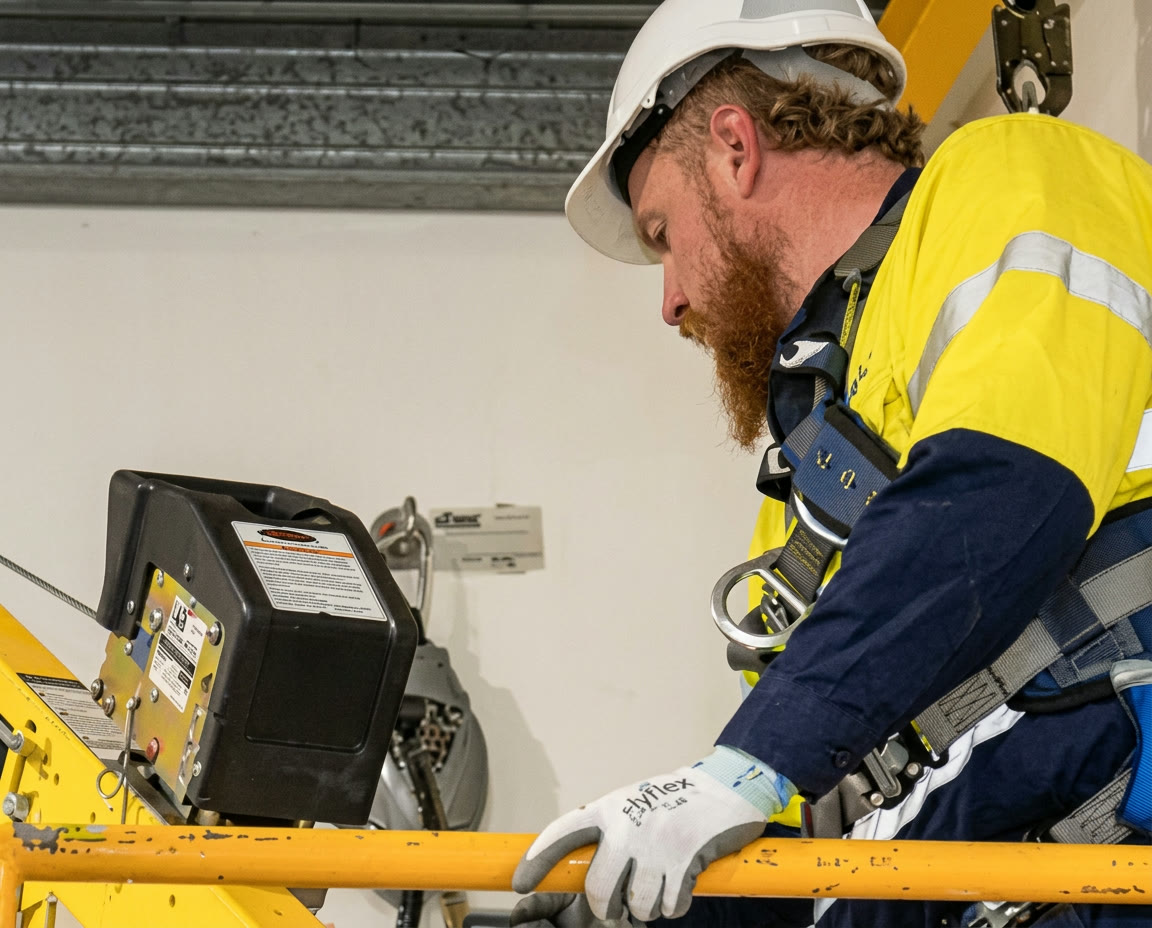
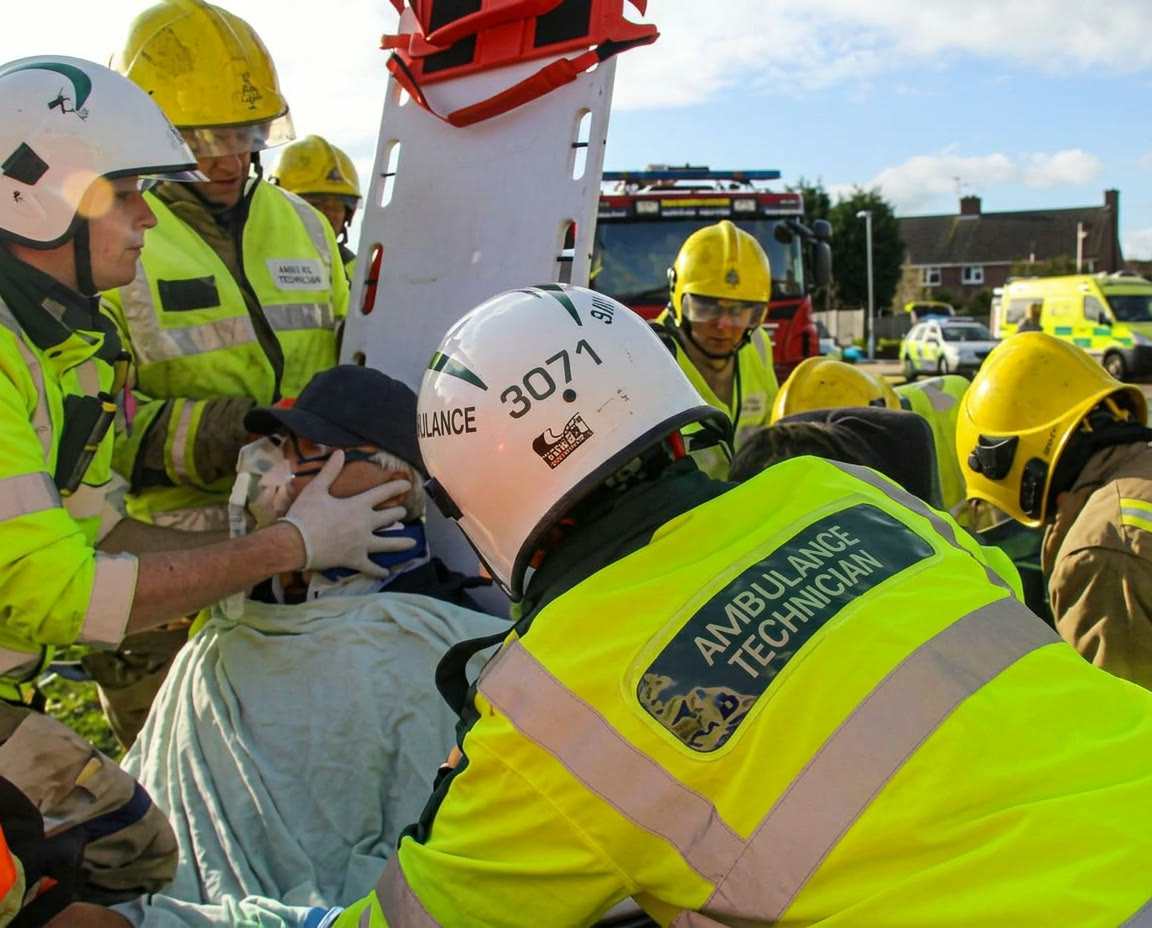
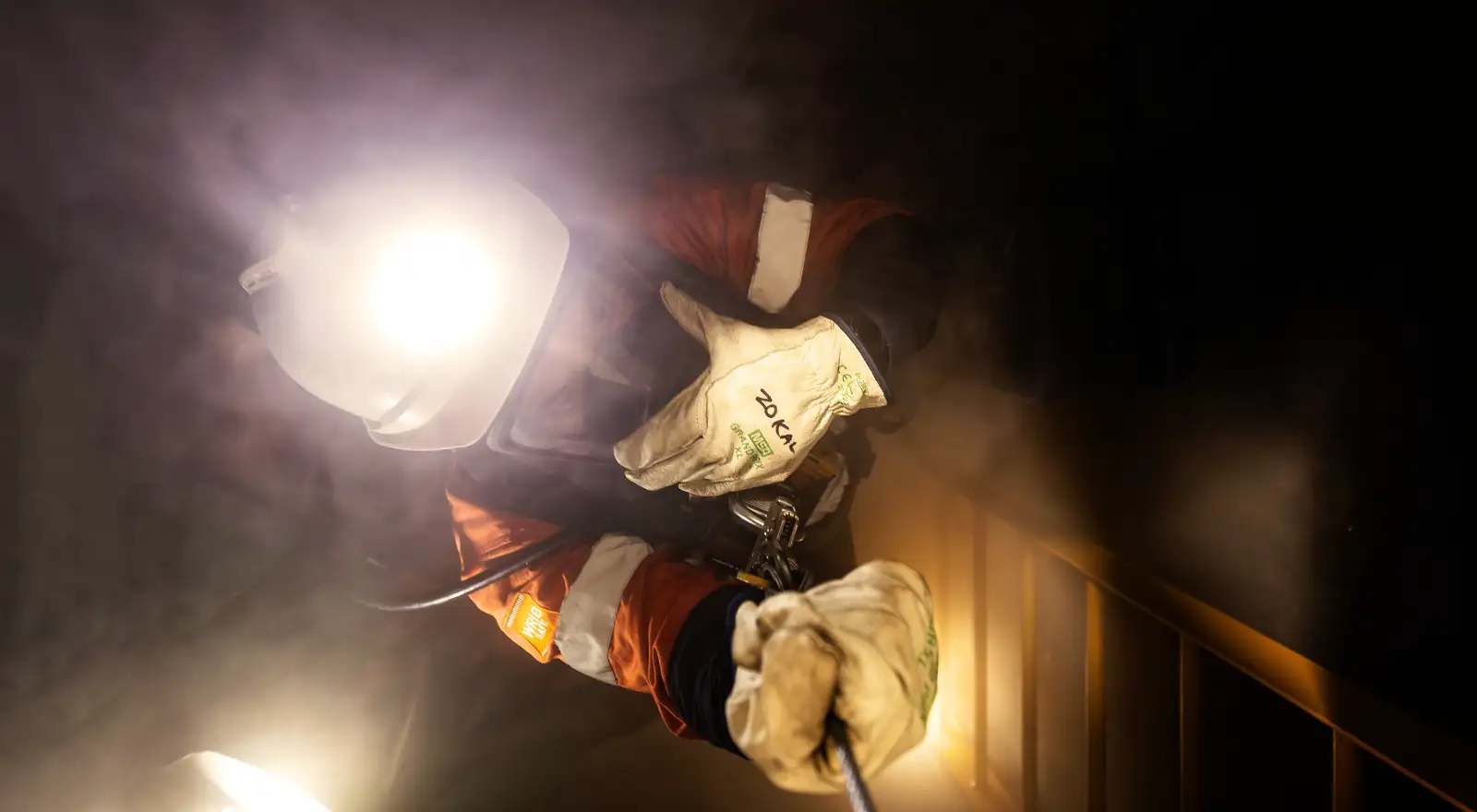
Training the whole team? We come to you.
We deliver Confined Space Training on-site anywhere in Australia. Tailored to your SWMS, your gear and your risks — with a single invoice and consolidated compliance reporting.
What this training covers
Nationally accredited confined space entry, gas testing, breathing apparatus and rescue training built around real Australian worksite conditions.
Delivered in Zokal's purpose-built simulation facility with vertical and horizontal entry rigs, gas detection equipment and rescue systems.
Get your team compliant with Zokal
See upcoming public dates, reserve seats online and receive instant email confirmation. Talk to us if you need a tailored on-site option.